The on Wednesday recorded a series of far-reaching legislative actions aimed at strengthening national security architecture, deepening electoral reforms, and expanding long-term economic planning.
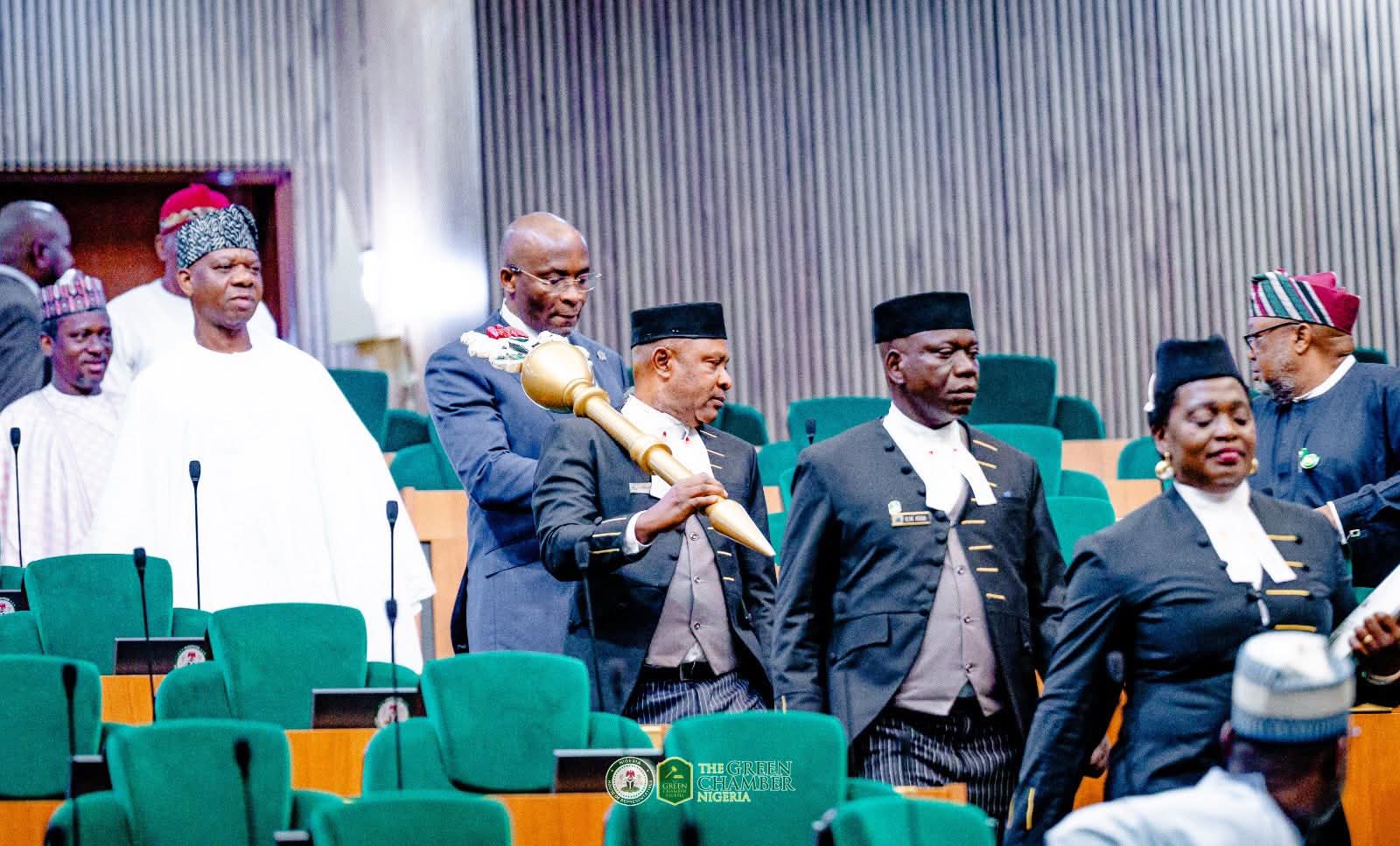
At plenary presided over by Deputy Speaker Rt. Hon. Benjamin Okezie Kalu, PhD, CFR, lawmakers passed four bills, including a proposal to establish a Legislative Security Directorate within the National Assembly and another to expand the number of Judges in the High Court of the Federal Capital Territory.
The proposed Security Directorate is expected to enhance protection within the legislature through a structured framework for personnel, operations, and institutional coordination.
In a significant push for electoral reform, the House also considered and adopted committee reports on amendments to the Electoral Act, 2026. The proposed changes seek to clarify jurisdiction in pre-election matters and introduce technology-driven procedures for serving election petition processes, with the aim of reducing delays and improving efficiency in electoral dispute resolution.
Lawmakers further advanced a landmark proposal for a Fifty-Year National Economic Plan, designed to ensure continuity in national development policies across successive administrations. If adopted, the framework is expected to serve as a long-term blueprint for Nigeria’s economic direction.
At the same sitting, three new bills were introduced for First Reading, while five others scaled Second Reading, including proposals to enhance transparency by mandating publication of financial records of Ministries, Departments and Agencies (MDAs) and Government-Owned Enterprises (GOEs). Other bills also seek to establish the National Defence College of Nigeria and the Naval Training Command to strengthen military training coordination.
Security concerns dominated part of the session as lawmakers adopted a Matter of Urgent Public Importance on renewed insurgent attacks in Gombi/Hong Federal Constituency of Adamawa State. The House was briefed on recent attacks that resulted in casualties and displacement, prompting renewed calls for immediate intervention by security agencies.
In its oversight function, the House also received the report of the Committee on Communications on the ₦479.5 billion budget of the for the 2026 fiscal year, outlining spending priorities across recurrent, capital, and sectoral development projects.
Meanwhile, the House urged the Federal Ministry of Industry, Trade and Investment alongside the National Automotive Design and Development Council to fast-track completion of the Dogondaji Automotive Youth Training Centre in Sokoto State to boost skills development and job creation.
The plenary session also witnessed political realignments as two lawmakers, Rep. Jakduwa Hassan Kaikaku and Rep. Bello Isah Ambarura, announced their defection to new political parties.
Overall, the sitting underscored the legislature’s renewed focus on institutional reforms, security strengthening, economic planning, and governance transparency.