By Fred Latimore Oghenesivbe Esq
In a sweeping display of political unity and strategic positioning ahead of the 2027 general elections, the Ijaw nation in Delta State has thrown its weight behind President Bola Ahmed Tinubu and Governor Sheriff Oborevwori, endorsing both leaders for a second term in office.
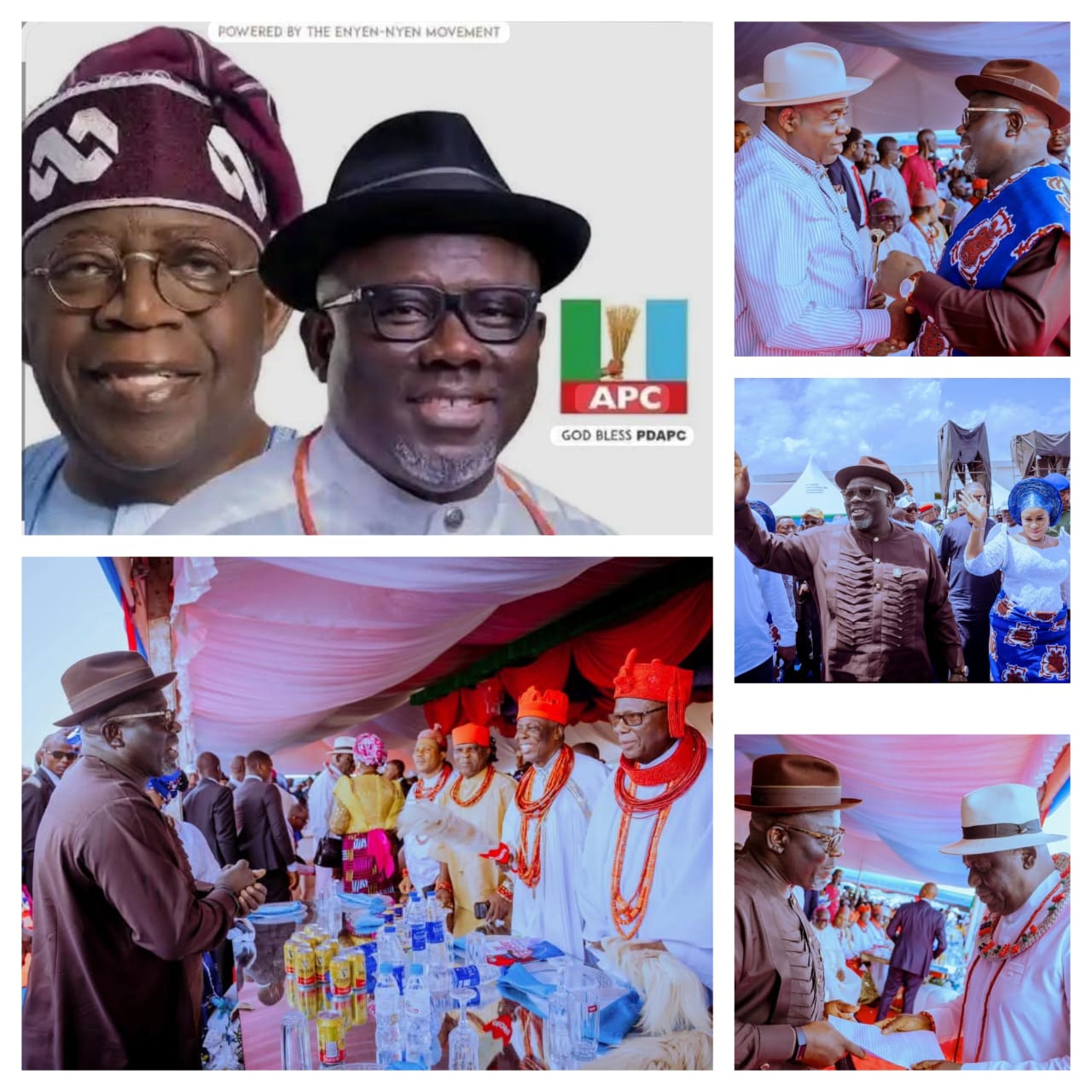
The endorsement, delivered with resounding unanimity at a grand reception in Bomadi, marks a significant moment in the evolving political calculus of the oil-rich Niger Delta. Organised by the Ijaw National Congress, the event drew a formidable gathering of political heavyweights, traditional rulers, and grassroots stakeholders, all converging in a rare show of cohesion that observers say could reshape regional alliances.
At the heart of the gathering was a carefully choreographed legislative-style endorsement. A motion moved by federal lawmaker Julius Pondi and seconded by state legislator Oboro Preyor was put to a voice vote presided over by Speaker Emomotimi Guwor, and passed without dissent. The symbolism was unmistakable: a unified bloc aligning early behind incumbency.
For Governor Oborevwori, the moment was both political and cultural. In a ceremony steeped in tradition, the Delta Ijaw Traditional Rulers Forum conferred on him the title Izonebimiewei “the man that does good” a nod to what leaders described as tangible development across riverine communities long plagued by neglect.
Standing before a mammoth crowd, Oborevwori leaned into both gratitude and quiet campaign messaging. He cited over ₦400 billion already invested in infrastructure across Ijaw areas; roads, bridges, schools, and health facilities, framing his administration as one committed to bridging the historical isolation of riverine settlements.
Projects such as the Bomadi–Gbaregolor Road, Ohoror–Bomadi Road, and the Ayakoromo Bridge were presented not merely as construction feats, but as political statements of inclusion.
“I remain grateful for the unwavering support of the Ijaw people,” the governor said, recalling the turbulence of the 2023 election and its legal aftermath. “This endorsement will not be taken for granted,” the governor assured Ijaw Nation.
Beyond Delta, the gathering also carried regional undertones. Governor Douye Diri of neighbouring Bayelsa State used the platform to challenge long-standing narratives about the Niger Delta terrain, insisting that geographical location should no longer justify underdevelopment. His call for unity among the Ijaw people hinted at a broader ambition, and consolidating influence across state lines.
Meanwhile, Ijaw National Congress (INC) President, Benjamin Okaba framed the event as both endorsement and negotiation, a moment to applaud progress while pressing for more investment in critical sectors like healthcare, education, and connectivity.
What emerged from Bomadi was more than ceremonial pageantry. It was a calculated political signal pointing to show that the Ijaw nation is entering the 2027 race with a clearer, collective voice. In Nigeria’s complex electoral map, where regional blocs can tilt national outcomes, such early alignment signals overwhelming victory.
For Tinubu and Oborevwori, the message is clear, support from the creeks has been secured.
For the Ijaw nation, the endorsement is both a reward for perceived performance and a strategic bet on continued relevance in Nigeria’s high-stakes political arena.
The Writer: Fred Latimore Oghenesivbe Esq, is the Director General of Delta State Bureau for Orientation and Communications, Governor’s Office Asaba.