
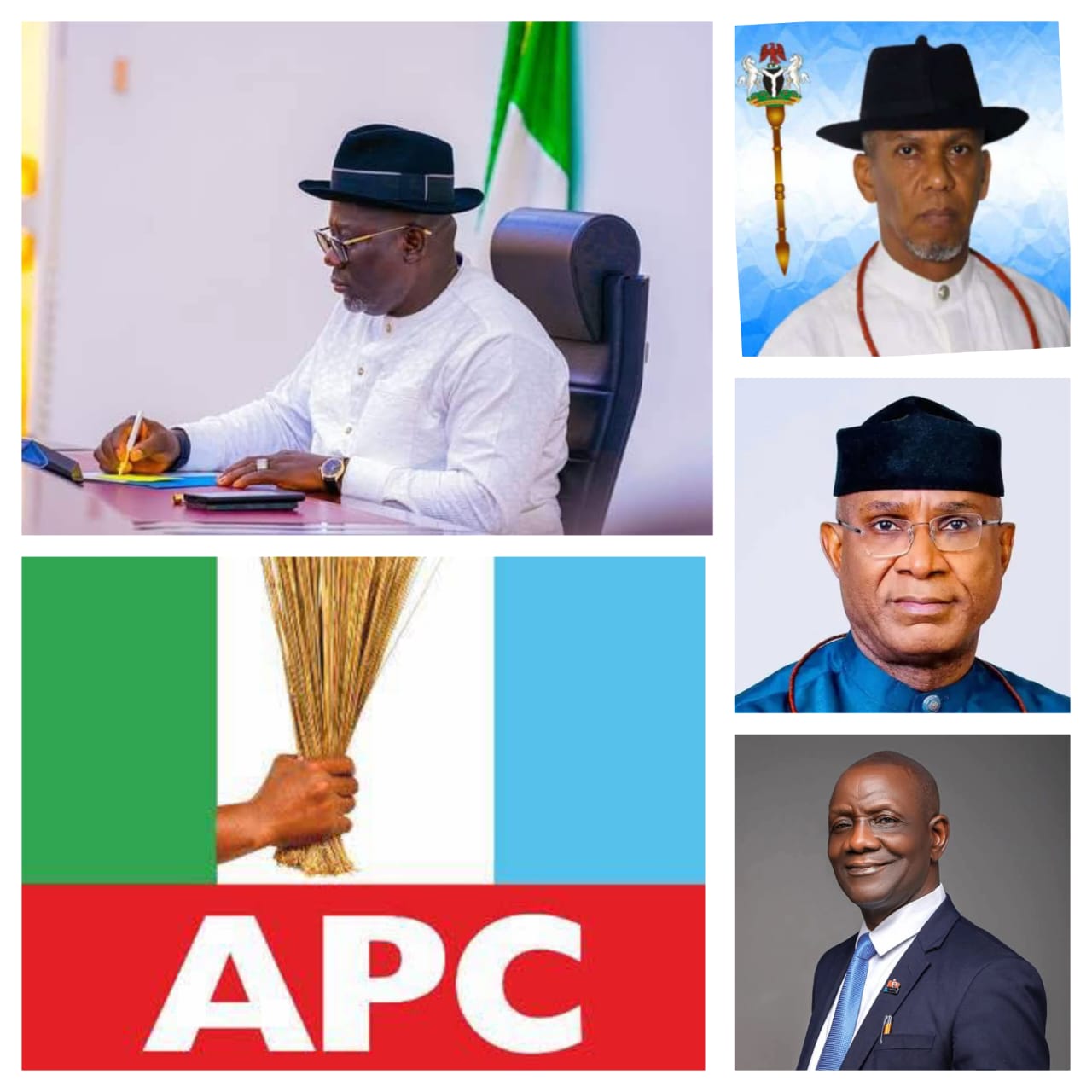
By Fred Latimore Oghenesivbe Esq
As Delta State inches toward the 2027 governorship cycle, the contours of political contestation are gradually emerging. Yet, beyond the rhetoric and permutations lies a more grounded reality, one defined by governance outcomes, infrastructural expansion, and shifting political alliances.
At the centre of this unfolding narrative is Governor Sheriff Oborevwori, whose administration is steadily crafting a case for continuity rooted in tangible development. Recent developments have further sharpened this trajectory.
The April 22 declaration by former Deputy Senate President, Ovie Omo-Agege, via his verified social media platforms to pursue a return to the Senate rather than the governorship as earlier predicted by some political observers has subtly reshaped the race. The incumbent Senator representing Delta Central Senatorial District, Senator Ede Dafinone, and other foreseeable aspirants will slug it out with DSP Ovie Omo-Agege in this election cycle.
While the governorship race remains open in principle, the absence, at least for now, of a visible challenger underscores a shifting dynamic in favour of the incumbent governor, Rt Hon Sheriff Oborevwori.
Equally significant is the political reconciliation between Oborevwori and former governor, James Ibori. In Delta’s political ecosystem, where elite consensus often determines electoral momentum, this renewed alignment signals stability within the ruling structure and strengthens the incumbent’s political base heading into the next election cycle.
Unarguably, the Oborevwori administration has made its most visible imprint in road infrastructure, especially mega flyovers and bridges. Across the state’s three senatorial districts, an expanding network of roads is redefining mobility, boosting commerce, and opening up previously inaccessible communities.
From the dualisation of Ughelli-Asaba highway and rehabilitation of key urban corridors in Warri, Effurun, and Asaba to the construction of strategic link roads across the three senatorial districts, the administration has pursued a deliberate policy of connectivity. Rural road projects have been equally impactful, linking agrarian communities to markets and reducing post-harvest losses.
These road networks are not merely infrastructural additions; they are economic enablers. By easing the movement of goods and people, they are accelerating trade, enhancing tourism potential in riverine and cultural hubs, and driving urban renewal across major cities. In many parts of the state, new roads have triggered property development, commercial activity, and renewed investor interest.
Beyond roads, the administration’s bold push in electrification is emerging as a defining pillar of its development strategy. Recognising that no modern economy can thrive without stable power, the government has embarked on a dual-track approach, strengthening grid infrastructure in urban areas while expanding off-grid solutions in rural communities.
A landmark step in this direction is the partnership with the Rural Electrification Agency, formalised through a Memorandum of Understanding aimed at delivering sustainable electricity to underserved areas. Through renewable energy mini-grids and solar solutions, communities previously cut off from reliable power are being integrated into the economic mainstream.
In urban centres, ongoing investments in transformers, substations, and distribution networks are improving supply stability for households and businesses. The broader implication is clear: increased productivity, reduced cost of doing business, and expanded opportunities for small and medium-scale enterprises.
Complementing these efforts is a forward-looking industrial policy anchored by the Kwale Economic Zone. Positioned as a hub for manufacturing, processing, and energy-based industries, the zone represents a strategic pivot toward economic diversification.
With its proximity to oil and gas assets and improving transport infrastructure, the Kwale Economic Zone is designed to attract investment, create jobs, and boost internally generated revenue. It reflects a broader ambition to move Delta beyond resource dependency toward a more resilient and industrially driven economy.
Underlying these initiatives is the administration’s M.O.R.E Agenda—Meaningful Development, Opportunities for All, Realistic Reforms, and Enhanced Peace and Security. Increasingly, this framework is translating into measurable outcomes across sectors.
Healthcare delivery is improving through the upgrade of primary and secondary facilities, while the education sector is benefiting from school rehabilitation, modern infrastructure, and enhanced learning environments.
Agricultural interventions are supporting farmers and agro-processors, while youth empowerment programmes are expanding access to skills and enterprise funding.
In a period marked by economic pressures nationwide, Delta State has maintained relative fiscal stability. Regular salary payments, ongoing project execution, and sustained engagement with contractors reflect a governance approach that balances ambition with prudence.
The Oborevwori administration’s emphasis on peace and security has also played a critical role. Through continuous dialogue with traditional institutions, community leaders, and youth groups, as well as the funding of logistics and provision of patrol vehicles for security agencies, the state has preserved a level of stability necessary for sustainable development to thrive.
These efforts have not gone unnoticed. Within regional and national circles, Delta’s governance model under Oborevwori is increasingly referenced in discussions around subnational performance and infrastructure delivery.
As political calculations intensify, the interplay of performance, party cohesion, and opposition readiness will ultimately shape the 2027 outcome. For now, Governor Sheriff Oborevwori is clearly consolidating both his governance credentials and political alliances.
The road to re-election is never without challenges. But in Delta State’s current trajectory, defined by expanding road networks, growing electrification, achievable industrial ambition, and political stability, Oborevwori is not merely preparing for an election; he is building a narrative of continuity.
Fred Latimore Oghenesivbe Esq is the Director General, Delta State Bureau for Orientation and Communications, Governor’s Office, Asaba.

