By Fred Latimore Oghenesivbe Esq.
Nigeria under President Bola Ahmed Tinubu is undergoing a defining phase of national recalibration, driven by bold and far-reaching economic reforms that are reshaping the foundations of governance and fiscal responsibility. Though demanding in their immediate effects, these decisions are steadily restoring macroeconomic balance, strengthening institutional resilience, and repositioning the federation for long-term stability.
More significantly, they are deepening a national conversation on how leadership at both federal and subnational levels can translate reform into inclusion, equity, and shared prosperity in a diverse federation. It is against this backdrop of national adjustment and renewal that the centenary lecture of the Yoruba Tennis Club in Lagos assumes profound symbolic and political significance.
For 100 years, the Club has stood as a rare civic institution for elite dialogue, intellectual engagement, and national reflection. Its decision to invite Governor Sheriff Oborevwori of Delta State to deliver the centennial lecture on “Inclusive Governance and National Unity: Lessons from Delta State for a More United Nigeria” was therefore not incidental. It was a deliberate affirmation that Nigeria’s unity is best strengthened when its diversity is engaged through dialogue, respect, and shared platforms of thought leadership.
Governor Oborevwori’s lecture resonated far beyond the ceremonial. It positioned inclusive governance as a national imperative rather than a subnational experiment, drawing from Delta State’s evolving governance architecture under his MORE Agenda; Meaningful Development, Opportunities for All, Realistic Reforms, and Enhanced Peace and Security. His intervention effectively elevated Delta State’s experience into a broader governance proposition for Nigeria’s future.
At the heart of his submission was the argument that Nigeria’s diversity, if properly managed, is not a burden but a strategic asset. Inclusive governance, he noted, must be intentional, structured, and measurable, anchored on fairness, participation, and equitable distribution of development outcomes across ethnic and political lines. In Delta State, this principle has been translated into practical governance choices that prioritise unity over fragmentation and development over division.
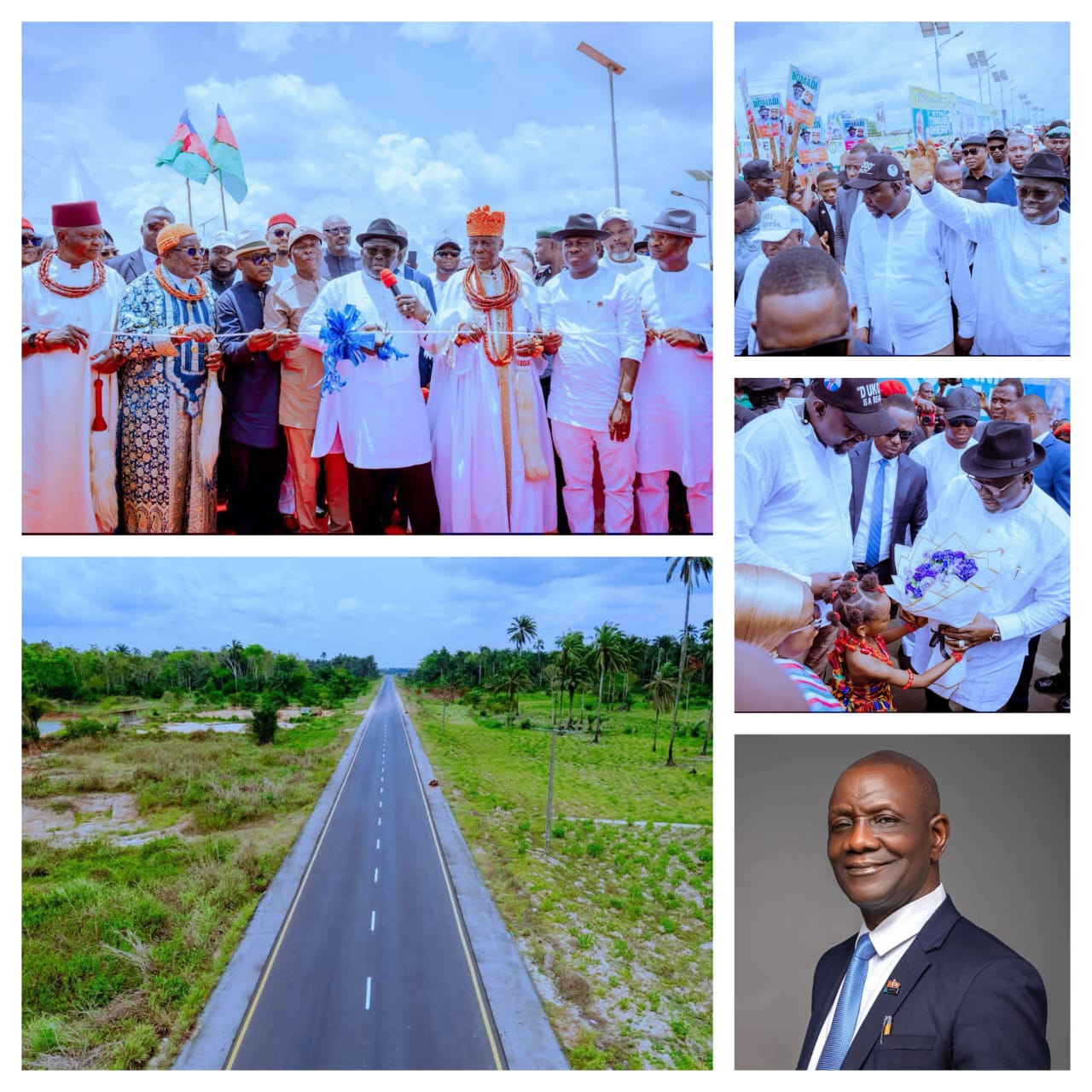
This philosophy is visible in the state’s infrastructure renewal drive. Mega projects such as the Effurun–Warri-Agbor-Ughelli flyovers and extensive road networks across urban and rural corridors are not merely engineering achievements; they are deliberate instruments of economic integration. By connecting communities and expanding mobility, these projects dissolve geographical barriers and foster a shared economic space across Delta’s diverse population.
Equally instructive is the administration’s investment in human capital development. Across the state’s three senatorial districts, educational infrastructure has been expanded and modernised to reflect balanced development. In the health sector, the enrolment of over 2.7 million residents into the state health insurance scheme stands as one of the most ambitious subnational social protection initiatives in Nigeria, reinforcing the principle that healthcare access must be universal and not conditional on status or origin.
The governor’s empowerment and inclusion framework further underscores this governance model. Over 300,000 beneficiaries of skills acquisition, entrepreneurship, and employment programmes reflect a systematic effort to widen opportunity and reduce exclusion. Complementing this is a robust social welfare architecture that includes targeted interventions for widows and vulnerable groups, affirming that inclusive governance must ultimately be judged by how it treats its most vulnerable citizens.
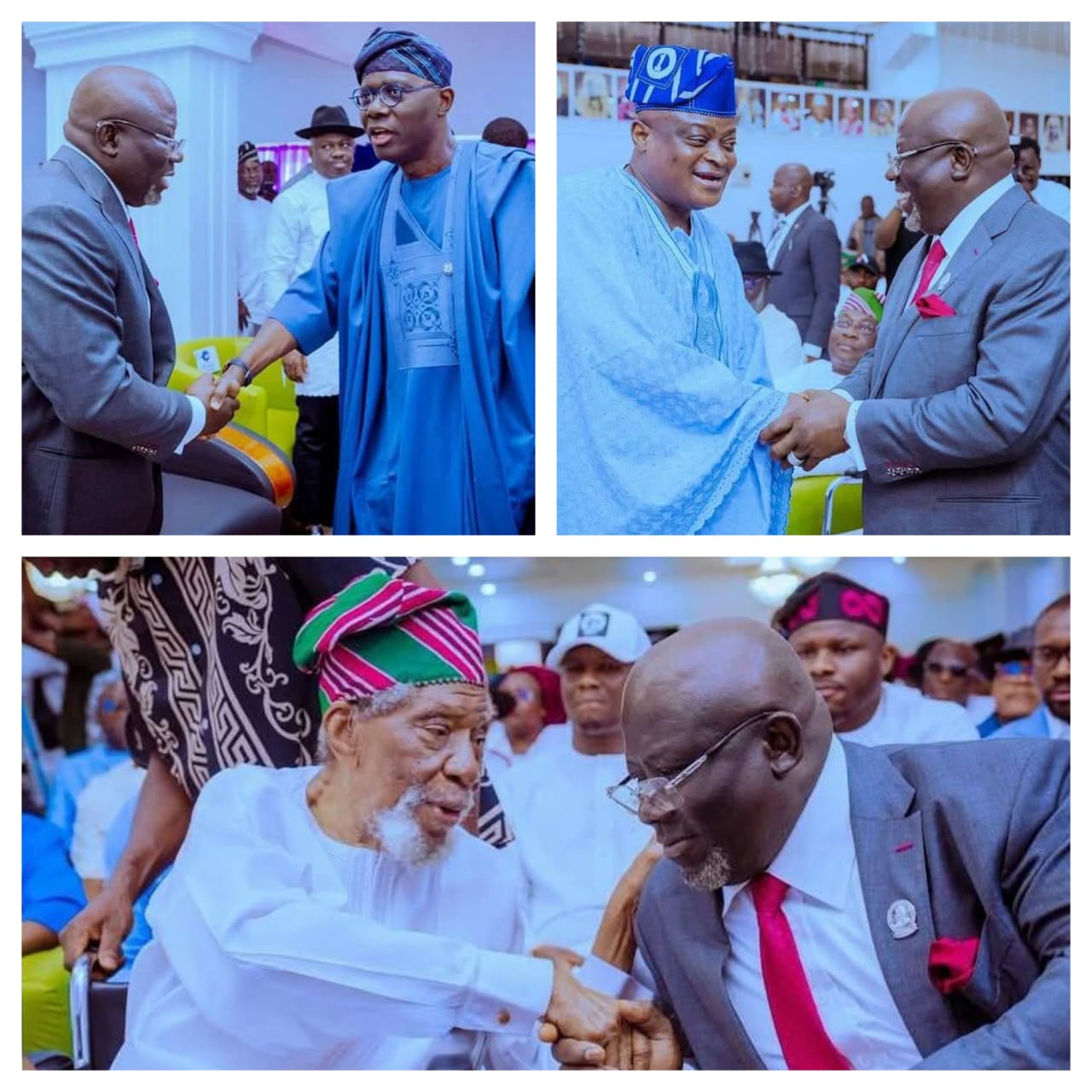
The symbolism of the Yoruba Tennis Club centenary added further weight to these ideas. The event became a convergence point for Nigeria’s political, economic, and traditional leadership. The presence of Lagos State Governor Babajide Sanwo-Olu, Speaker of the Lagos State House of Assembly Rt. Hon. Mudashiru Obasa, captains of industry, traditional rulers, and senior government officials from Delta State underscored the event’s national character.
Governor Sanwo-Olu’s description of Governor Oborevwori as a “nationalist, a detribalised Nigerian, and a performing governor” captured the essence of the gathering. His recognition of Delta State’s significant contribution to national wealth through crude oil production further reinforced a central truth of Nigeria’s federation: prosperity is shared, and national progress is built on interdependence among its federating units.
In this context, Oborevwori’s lecture transcended state governance and entered the realm of national policy philosophy. He called for a deliberate restructuring of Nigeria’s governance culture to ensure representation, fairness, and participation at all levels.
He further proposed the institutionalisation of a decennial national conference involving government, traditional institutions, civil society, and other stakeholders as a mechanism for periodic assessment of national cohesion and inclusivity.
What emerges from the intersection of President Tinubu’s reform-driven federal leadership and Governor Oborevwori’s inclusive subnational governance model is a complementary governance continuum. Federal reforms are laying the fiscal and structural foundation for a more resilient economy, while subnational governments are expected to translate these gains into tangible inclusion and social stability. The success of Nigeria’s reform agenda will ultimately depend on this synergy.
In Delta State, this translation is already evident across sectors; transportation, education, healthcare, and social welfare. From modern flyovers and road networks to mass healthcare coverage and large-scale empowerment programmes, the administration demonstrates that inclusive governance is not theoretical; it is practical, measurable, and transformative when deliberately pursued.
In conclusion, the Yoruba Tennis Club centenary lecture was more than a ceremonial milestone; it was a reaffirmation of Nigeria’s enduring possibility as a united, plural, and forward-looking federation. Within that historic setting, Governor Sheriff Oborevwori’s contribution stood out as a compelling governance statement rooted in inclusion, equity, and shared prosperity.
His presentation of Delta State’s experience under the MORE Agenda reflects a governance model that is already yielding measurable outcomes across infrastructure, healthcare, education, and social welfare. From transformative road and flyover projects to expanded health insurance coverage and large-scale empowerment initiatives, the trajectory of development in Delta State demonstrates that inclusive governance is most effective when it is consistent, deliberate, and sustained over time.
As Delta State continues on this developmental path, the consolidation of these gains will remain critical to deepening stability, strengthening social cohesion, and expanding economic opportunity across all segments of society. The durability of such outcomes depends largely on policy continuity and the steady entrenchment of governance systems that prioritise inclusion over exclusion.
Ultimately, what emerged from the Lagos centenary lecture is a clear governance message: that Nigeria’s future stability is tied not only to national economic reforms but also to the ability of subnational leaders to sustain inclusive, people-centred development over time.
In that broader national journey, Delta State’s evolving model offers a reference point for continuity, cohesion, and enduring progress.
Fred Latimore Oghenesivbe Esq, is the Director General, Delta State Bureau for Orientation and Communications, Governor’s Office Asaba.